US politicians on both sides of the aisle have spoken out about the civil war in Sudan that has killed some
400,000 people and displaced two million more--including a
unanimous House vote that defined the violence as "genocide." But in the two years since Congress spoke in that unified voice, there's been
no major change in Darfur. This week the UN's departing humanitarian chief said Darfur is in "
free fall" and outgoing UN head Kofi Annan decried the "
shameful passivity" of world governments who have all but ignored this "
new Rwanda."
So: is American bipartisanship real in a legislative sense?
No, according to the
Darfur Scorecard, run by the nonpartisan
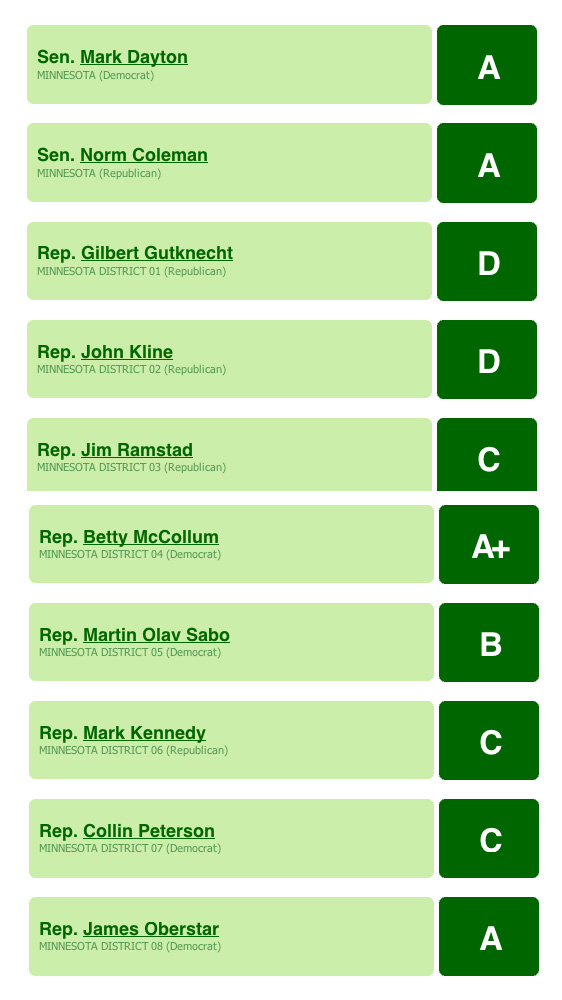
Genocide Intervention Network. It ranked every member of the House and Senate based on factors including votes on bills that could affect change in Darfur, from the Darfur Peace and Accountability Act to measures seeking to increase humanitarian aid. In the Senate, those with the highest scores were overwhelmingly Democrats and those with the worst were Republicans.
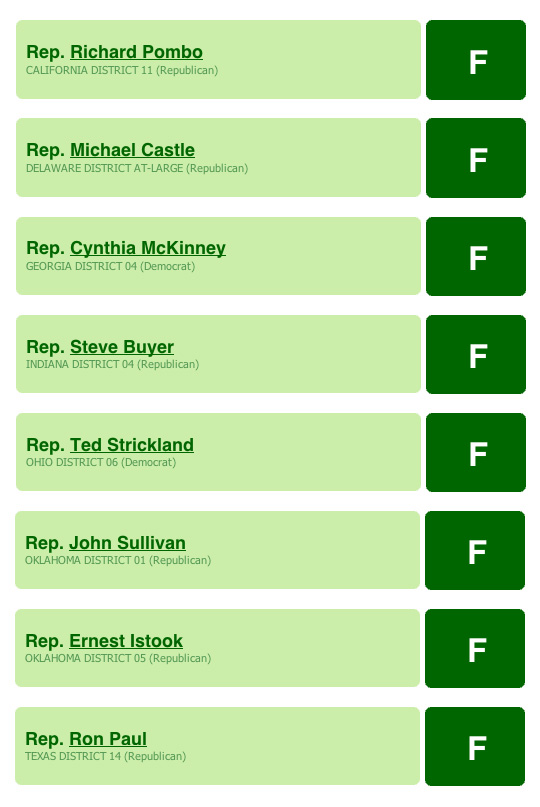
Eight of 10 members who received F scores were Republican, and congressional members receiving grades D through F outnumbered Democrats by 164 to 14. On the other hand, politicians with scores of A and A+ were also mostly Democrats: 120 Democrats versus 19 Republicans (independents Joe Lieberman and Bernie Sanders are also in this group).
 The Daily Irrelevant: