You've got a kid in Iraq who is emailing mom daily, talking about the realities of what he or she sees. Information is moving -- you know, nightly news is one way, of course, but it's also moving through the blogosphere and through the Internets. It's amazing how many emails I see from people that are writing in what they think and what they hear.But as C&L says, maybe Bush's big screwup is mentioning blogs at all: the "Army has ordered soldiers to stop posting to blogs or sending personal e-mail messages, without first clearing the content with a superior officer," according to Wired.
5.03.2007
Again with the Internets
Calling himself "the commander guy," the prez again shows his command of the English language:

AltWeeklyDeathWatch shuts down
The anonymous blog AltWeeklyDeathwatch, having taken more than a passing interest in City Pages' editor Kevin Hoffman, has stopped publishing after reporting Hoffman threatened legal action against what he dubs a "hate site." Created in January by former employees of Village Voice and New Times (now merged as Village Voice Media), the site aimed to "chronicle the death spiral of the American alternative weekly as it descends through identity crisis, self-parody, and irrelevance."
In its final post, the site said Hoffman "has rained both legal and vaguely physical threats on our source," and added that the decision to stop publishing was made after "folks with no connection to this blog are named in a comments section."
In its final post, the site said Hoffman "has rained both legal and vaguely physical threats on our source," and added that the decision to stop publishing was made after "folks with no connection to this blog are named in a comments section."
The site has criticized Hoffman's writing, professional demeanor, and editorial style, while also veering into more personal areas: his marriage, choice of tattoos, and personal appearance. Asked to comment on AltWeeklyDeathwatch's shutdown, he said, "No, I'm not going to comment on that site."
4.30.2007
Wasn't "Mission Accomplish" an artificial timetable?
 George W. Bush says he'll veto an Iraq funding bill tomorrow because it includes a plan for bringing U.S. troops home from Iraq soon. In a press conference last week, he said:
An artificial timetable of withdrawal would say to an enemy, just wait them out; it would say to the Iraqis, don't do hard things necessary to achieve our objectives; and it would be discouraging for our troops. And therefore I will strongly reject an artificial timetable withdrawal and/or Washington politicians trying to tell those who wear the uniform how to do their job.Bush's veto will fall on the fourth anniversary of his memorable proclamation of the end of combat operations in Iraq. "In the battle of Iraq, the United States and our allies have prevailed," he said. Four years have passed, 2,808 U.S. troops have been killed, and more than 35,000 Iraqi citizens have died since then. If this is the natural course of victory, I'll take an artificial timetable any day.
4.29.2007
Beach Impeach
 1500 people at San Francisco's Ocean Beach on April 28, 2007, the nationwide launch of Impeachment Summer.
4.28.2007
A.R.T. action on Impeachment
 Press release via NewsGrist:
WASHINGTON, D.C.
FOR IMMEDIATE RELEASE:
HIGH CRIMES AND MISDEMEANORS - WE WILL NOT BE SILENT
Multiple actions occurred in the early afternoon today inside the Hart Senate Office Building. Eight New York activists were among the 15 plus arrested.
TODAY, APRIL 26, 2007, A.R.T.* OCCUPIED THE HALLS OF CONGRESS IN A DRAMATIC TWO-PART ACTION.
First, in a massive distribution, A.R.T. hand-delivered a 20-page tabloid petition to every representative. It contained documentary evidence for indictments, literally putting impeachment back on the table.
Then, at 1PM, in a spectacular visual feat, A.R.T displayed the full text of Article II, Section 4 to the Senate as a 30-foot banner drop in the Hart Office Building atrium. A second 30-foot banner read "YOUR SILENCE YOUR LEGACY". Organizers said, "We must magnify the refusal of Congress to uphold the Constitution. Their silence equals complicity in the flagrant crimes of this administration."
Contact: *A.R.T. (Activist Response Team)
email: stateofemergencyaction@gmail.com

Sex & Al-Qaida: Is Timing of Capture News Related to "D.C. Madam" Story?
 Facing a mountain of bad news, the Bush administration needed some good news heading into this weekend: its "AIDS czar" abruptly resigned after admitting he used an escort service that's facing federal prostitution charges, two batches of new documents were released in the widening U.S. Attorney purge case, Condi Rice indicated she'd refuse to comply with a House subpoena to discuss Iraq War intelligence, and the president earned a career-low 28 percent approval rating in a new poll.
And they got it: one of Al-Qaida's top leaders was captured. But when Abd al-Hadi al-Iraqi, who is believed to have planned the July 7, 2005, subway attacks in London, was captured -- sometime last fall -- raises questions about whether the timing of the story's release was guided by newsworthiness or an effort to combat an unflattering news cycle.
A glance at newspaper headlines suggests the Pentagon's story was taken by some in the press as breaking news. The Times Online seemed to think so. It ran a present-tense headline, "7/7 'mastermind' is siezed in Iraq." "Al-Qaida aide a big catch, says Pentagon," announced the Chicago Sun Times' story, and Stars & Stripes' front page blared, "Al-Qaida leader at Gitmo after capture."
But read a bit further, and you'll discover that al-Iraqi was captured "late last year" and has been held and interrogated by the CIA since then. Not even the transfer of custody of al-Iraqi to the Department of Defense's Guantanamo Bay facility is breaking news: according to the New York Times that switch happened a week ago. ("Al-Qaeda Bigwig Transferred from One U.S. Agency to Another" doesn't have the same sensational appeal.)Perhaps the biggest story the Bush administration doesn't want you to read from this weekend is the announcement that Deputy of Secretary of State Randall Tobias was stepping down after he -- a married man who advocated being "faithful" as a way to prevent AIDS -- admitted he was a customer of an escort service that allegedly ran a prostitution ring. In what the Washington Post calls "an unusual statement issued at 5 p.m." Friday, Tobias said he'd be stepping down "for personal reasons." Within minutes of the announcement, his bio at USAID, the agency he oversaw, was erased. On Thursday, he'd admitted he'd used an escort service run by Deborah Jeane Palfrey and would call up "to have gals come over to the condo to give me a massage." He claimed there was "no sex" in said massage encounters.
While other news, from Iraq to the US Attorney's scandal, will surely have more wide-ranging effects on the world, the Tobias case could be the one Bush is more worried about. Many of the remaining 28 percent of Americans who still support Bush do so on moral grounds, citing the president's faith. The hypocrisy of Tobias, a man who along with his wife donated more than $100,000 to Republican campaigns and PACs, could do damage.
So, too, could the fact that so-called "D.C. madam" Palfrey provided ABC News with "thousands of numbers" of clients and has been perfectly clear that she'll take down any and all of her high-profile Washington customers to save her own skin. Already, she's named Harlan K. Ullman, the strategist behind the "shock and awe" military strategy, as a client.
"I'm sure as heck not going to be going to federal prison for one day, let alone, four to eight years," she told ABC, "because I'm shy about bringing in the deputy secretary of whatever."
Given that ominous "whatever," it might take more than belated news of a key Al-Qaida capture to abate Palfrey's media surge.
The Books: Take Time
Last night we saw The Books perform at the Walker. Their wonderfully textured sample-based music was accompanied by projections created from footage found at thrift stores along their tour route. The crowd was young and hip--one I hadn't seen at the Walker before--but the band was refreshingly earnest and offered up songs and videos delivered with what I'd have to call deadpan sweetness. Here's one of my favorite pieces, which I dedicate to my dad, who's retiring Monday after four decades as a marriage and family counselor, adoption agent, and social worker. It's called "Take Time."
4.27.2007
The 70th Anniversary of "Shock and Awe"
 Seventy years ago today, planes from Nazi Germany and Fascist Italy made one of history's more infamous bombing runs -- and its first test of the military strategy now known as "shock and awe." In wave after wave, their low-flying fighters -- acting in service of Fascist Gen. Francisco Franco -- dropped a cumulative 30 tons of munitions, strafing civilians with machine guns, and setting fire to what remained. By the end of the day, some 2,500 people were dead or injured and three-quarters of the town's buildings were destroyed, according to the Basque government.
"Guernica, city with 5,000 residents," wrote the commander of Germany's Condor Legion in his journal, "has been literally razed to the ground. Bomb craters can be seen in the streets. Simply wonderful."
The attack, of course, inspired one of Pablo Picasso's most celebrated and grisly works, a painting, named after the town, that appeared in the Spanish pavilion at the 1937 World's Fair in Paris. As he worked on the 25-foot mural, he reportedly said, "In the panel on which I am working, which I shall call Guernica, and in all my recent works of art, I clearly express my abhorrence of the military caste which has sunk Spain in an ocean of pain and death."
But beyond inspiring one of the world's most famous pieces of art, the bombing of Guernica sparked a new focus on peace in the town. The Gernika Peace Museum, which was created in part to investigate and present the truth of the attacks (they were first attributed by German soldiers to "the Reds"), is now seen as an international leader in conflict resolution and peace studies. Its mission is to remind and inform visitors about the raid 70 years ago, but also to inspire them to reflect on the nature of peace in the world and our struggles with it today.
"I think Guernica is a good example of not forgetting and trying to go further," said Iratxe Astorkia, the museum's director.
Today's anniversary has renewed calls -- so far refused -- for Picasso's Guernica to make its first showing in the town that shares its name.
4.26.2007
Conjuring and Curating: An interview with Peter Eleey of the Walker Art Center
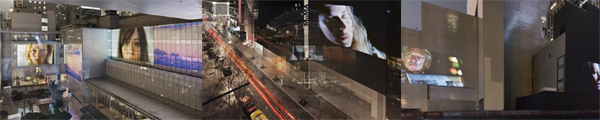
 From Christo’s Gates to the Statue of Liberty, New York is a tough place to compete in the realm of public art. But one organization, Creative Time, has been doing it, boldly, for 33 years, bringing fantastic explosions to the skyline above Central Park, moving images of Donald Sutherland and Tilda Swinton to MoMA’s facade and a Chinese artist’s quiet intervention — delivered with a pot of water and a Chinese calligraphy brush — to a downtown sidewalk.
 At the helm for these projects by Cai Guo-Qiang, Doug Aitken, and Song Dong was Peter Eleey, who left Creative Time in March to become the Walker’s new Visual Arts Curator. Eleey took a moment away from organizing his first show here, a multidisciplinary exhibition of Trisha Brown’s dance and visual art scheduled for April 2008, to discuss his past projects, “magical thinking” in art, and the question of success and failure in a curator’s work.
Your last job was at Creative Time, an organization that since the early 1970s has used public spaces and spaces not often used for art to present temporary installations. This challenges what we traditionally think of as the art-viewing experience.
It’s true, unless we expect art to be shaking up exactly those expectations. There’s a great thing that happens when art surprises us, and that drama can often be easier for artists and arts presenters to create outside a museum. But in some ways the key to surprise is just understanding what people’s expectations are in a given situation, and of course we have all sorts of expectations inside a museum. Though I was working over the last few years largely outside of those institutional frameworks, I gradually became curious about the challenges of curating with those “ interior” expectations in mind.
As seen from New York, what was it about the Walker that you found appealing?
For one, the Walker strives to be “ more than a museum,” and this sense of the institution as something more porous, with fluid boundaries, was very attractive. Most importantly, perhaps, the Walker is known as a place of unfettered experimentation and commitment both to artists and to audiences. So often arts presenters talk about giving artists the space to experiment and try new things, and we forget that the best contemporary museums should also be places where audiences feel they have the opportunity and support to challenge themselves. I think that’s something Kathy [Halbreich, the Walker's director] in particular should be credited with — an even-handed commitment to this kind of experimental risk-taking relationship on both sides of the table.
How did that idea of risk-taking factor into your work at Creative Time?
The commissioning of new artworks is always a risky proposition, because you never know what you are going to get. That’s certainly also the rewarding part of it. But some projects are riskier than others. Cai Guo-Qiang’s Light Cycle, for example, was a fireworks event we organized in Central Park in 2003 to celebrate the park’s 125th anniversary. We were working with relatively untried technology, in which we had a microchip in every single shell to control its timing so Cai could draw in the sky.

I’m curious about that project. The chips make it so he can alter the trajectory of the pyrotechnics as they go through the air?
Cai worked with a fireworks company to pioneer this technology that allows you to control the timing of the explosion, so if you calculate for the velocity of the shell you can basically figure out at what height you want it to explode. You don’t change the trajectory, but you can nevertheless choreograph something with that information. It isn’t failsafe, however, which brings us back to your earlier question: the project was risky because we were inviting lots of people and then setting off a huge amount of these inherently unpredictable explosive devices, but also because, frankly, we just didn’t know if the piece would actually work. Here we’d trained the entire city’s attention on this five-minute event, and, in fact, it didn’t totally work, which raised a lot of complicated issues.
One thing that seems to tie some of your outdoor projects for Creative Time with your indoor gallery work — linking, say, the ephemeral projects like Jenny Holzer’s projections or Doug Aitken’s sleepwalkers to Strange Powers, the show you curated with Laura Hoptman — is the transient. I think of Song Dong using Chinese calligraphy to record time with water on the sidewalks, which evaporated almost as soon as he did it. Or in Strange Powers, you called it “ magical thinking,” visual art that has the power to conjure something invisible.
I guess you could say that, though transience and invisibility are of course very different things, and not necessarily related. I do think, however, that conjuring is a valuable way to consider our experience with art. The way I thought of the work we did at Creative Time was very much as a series of conjured events — and indeed much more as events than as objects, even when we were dealing with objects. I suppose that lends itself somewhat to ephemeral things. Everything Creative Time does is temporary. Obviously you can do a huge temporary sculpture (some of which I also did), but it happens that a lot of the projects I worked on were ephemeral, not least because it’s complicated to drop big objects into New York City. As it turns out, there actually are relatively few public spaces in New York. So at a certain point it became clear that one of the ways we could serve artists was to try engaging them with the city in more ephemeral ways, just from a practical perspective. But to your larger point, I don’t know if I have a specific predilection towards ephemeral things. Maybe it’s something I should watch out for.
I suppose asking a curator to look back on favorite projects or artists is like asking you to pick a favorite child. What are some of the projects that really stand out?
One of the best aspects of my work at Creative Time was the opportunity to work on projects at a range of scales, and all of them were favorites. Projects like Doug’s or Jenny’s or Cai’s were all exciting as major spectacles, but the smaller ones were just as thrilling for me. Michael Rakowitz did one of those smaller projects last fall; it was particularly beautiful in its balance of intimate and global experience, and lends itself well to description. Michael wanted to reopen the import/export business with Baghdad that his grandfather had operated in New York until 1960, and to import dates from Iraq for sale through the store. His grandparents were Iraqi Jews who left Iraq in the 40s. Of course, this is a country we now have cordial diplomatic relations with, and we hear much from the president about how trade should be encouraged with Iraq, how essential it is to the country’s eventual stability. Michael thought it was worth taking advantage of this, in part to expose the challenges involved in testing this proposition, and the challenges were many. For the project, Michael opened a store on Atlantic Avenue in Brooklyn in a strip of other Arab stores, and his dates ended up being the first retail goods from Iraq available for sale in the US since 1991.
We ended up not getting very many of them. Initially Michael contracted for 2,000 pounds of dates. It was hard to find someone who would agree to grow the crop because so many of the date palms have been completely destroyed by this war — and also by the 1991 war. It was harder, though, to find someone to transport the dates. The dates from our initial shipment never made it out of the country. They sat on the truck and went back and forth from the Syrian border to the Jordanian border for weeks on end, essentially mirroring the same sad trajectories of the internally displaced refugees who were trying to get out of the country.
We knew it was a conceptual undertaking from the beginning. I hoped we’d get the dates, but I wasn’t enormously optimistic. In the end the company that was shipping them for us took pity after the shipment spoiled in their truck, and they sent a few boxes by DHL. These sat in customs for probably two weeks. In a great final irony, we got them within days of the release of the Iraq Study Group report. So the timing worked out wonderfully.

That brings up a question I wanted to ask about the pyrotechnics that didn’t work as planned: is there such a thing as failure in curating or contemporary art? Or is that just a feature of the terrain of risk-taking and bold thinking?
That’s a good question. I think what’s always at issue for us as curators and artists is getting a handle on a set of criteria to evaluate a work’s success. Audiences think that there is a set of immutable criteria — that there are right answers and wrong answers. I think the Walker’s been instrumental in putting the lie to that notion. Even among colleagues we have visceral and intense debates about what kinds of works are successful and what are not. Was Doug’s project a success? The projector went on, people came, the film was finished on time, the basic practicalities worked. By any standard, I would consider the project successful, even if we still wish to debate its merits. Whether it works for everybody is always another question. I suppose that if the door is jammed shut for a show, it would be a failure because there’s no event and there’s no artwork to see and you’re asking people to come out to look at nothing — unless, of course, that’s the point.
With Cai’s project, this is something I still struggle with: the degree to which the project was a failure. It was certainly a failure in the mind of our sponsor. We never heard from them again after that. It was also considered a failure by the New York Times, which had been planning to put it on the cover of the national edition, until the photographer couldn’t get a good shot. In that sense, I guess it didn’t work either. But I know that for a great many people who came out in what turned out to be a heavy downpour, there was still an incredible thrill in seeing this project happen. In the end, it was OK for Cai, and ultimately for me as well. I just think we should have done more to frame the event as an experiment.
I’ve asked the same question, in a blunter form, to many artists from Rirkrit Tiravanija and Robert Storr to Tim Griffin and Thomas Hirschhorn: can art change the world? But maybe the question should be: what is art for?
We certainly want art to change the world. Jerry Saltz has a very nice take on this question in a well-blogged article published in the Village Voice — as it happens, a piece he wrote in response to Strange Powers. To the extent that art can in fact change the world, it does so in very incremental ways. Art changes our sensitivities in the way we experience things, the way we think about things. It’s disruptive in that way. It’s also sometimes ratifying. I think art is fundamentally a strange problem that if enthusiastically engaged, has great and fruitful implications for how we understand the world.

That’s an interesting way to take it: what is the magic of art that provokes people to freight it with these huge expectations? I don’t think people have the expectation that poetry or photojournalism is going to change the world.
But photojournalism really does have a much more immediate effect on the world, not least because it generally reaches a much larger audience. Part of our curiosity as to whether art can change the world comes out of the early history of the avant-garde, its conflation of art and politics, and its intimations of radicality. A certain hangover from those heady periods is still with us, combined in a complicated way with a nostalgic guilt we may feel about the elite associations attached to art, particularly in an era in which art can seem like it is more commodified than ever. I also think that in this day and age, we have an interest in things that shake us up, and yet in which we can find both intimacy and the sense of belonging to something bigger than ourselves. Art, and museums in particular, afford us that experience. Maybe movies or sports have that potential as well. I think that we once found something similar in politics, and I suspect that some part of our desire for art to be world-changing may be due to the failure of our political system to engage us in ways that we find meaningful. Perhaps in that sense, if baseball had any history of pretending to change the world, we might ask the same things of the Twins that we ask of contemporary art.
Images (top to bottom): Peter Eleey; Cai Guo-Qiang’s Light Cycle; sleepwalkers by Doug Aitken; Michael Rakowitz’s Return; Strange Powers (works by Pawel Althamer and Artur Zmijewski, Eva Rothschild, Center for Tactical Magic, and Friedrich Jrgenson)
David Choe paints Facebook

David Choe, who's giving a free artist talk at the Walker in Minneapolis on May 24, just finished painting the offices at Facebook.com, and Wooster Collective has the link to the shots.

4.23.2007
Star Wars turns 30 May 25.
 Which makes me, well, older than that. Wired commemorates the occasion with a gallery of rarely seen production photos from the filming, including this one with what looks like a proto-R2-D2.
The new New American Dictionary
 The Institute for Infinitely Small Things has produced a dictionary of fear to compile the post-9/11 verbiage we've become familiar with, from "Islamofascist" to "surge." The New American Dictionary launches Thursday night in Cambridge, MA, and can be purchased online. Guerrilla Innovation writes:
It includes 68 new terms i.e. Preparedness and Freedom Fries as well as terms that have recently been redefined i.e. Torture.
The dictionary also has an interactive dimension. 58 terms are left undefined for the reader to pencil in their own definition. Furthermore, readers are invited to submit their additions to the institute for a possible inclusion in the 2nd edition.
4.22.2007
The Voluntary Buyout That Wasn't: Strib Denies Sports Writer's Bid to Keep Working
 Ninety-seven seconds before midnight on March 10, Star Tribune sports writer Steve Aschburner emailed his managers telling them he wanted to take a voluntary buyout of his contract. He was on the road, covering a Timberwolves game in Atlanta, and his decision came at the very end of a five-day window in which employees could choose to leave the paper in exchange for a payout for time served.
Aschburner quickly regretted his decision, recognizing it as an "impulsive, stressed-out thing" complicated by personal issues and the "ticking bomb" nature of the five-day clause, and within four days he told his editor he wanted to stay. For the past six weeks he's been pleading with Star Tribune managers to let him keep doing a job he loves -- but what he's found is that management sees his buyout as anything but voluntary.
For 13 of his nearly 21 years at the Star Tribune, Aschburner's beat has been the NBA, and the Minnesota Timberwolves in particular, and in that time he has earned praise from fans -- including one who hailed his ability to work the word "vomitorium" into a piece on a Timberwolves' loss -- and colleagues alike (he recently finished a two-year stint as president of the Professional Basketball Writers Association). And while he couched his successes in modest terms, he admitted, "I really loved my job, and I think I made [the Star Tribune's NBA coverage] into a brand."
But in the five days after the Star Tribune sale to Avista Capital Partners was finalized, he found himself facing a "perfect storm" that fueled his decision to leave his job: "The grind of the season, the isolation of the road, some miscommunication with my wife and then the shock and scare of a friend's and peer's death." A sudden heart attack killed his colleague, the seemingly healthy 55-year-old Hartford Courant sports reporter Alan Greenberg, and seeing himself as out-of-shape, he wondered if he was next. Combined, these factors left him "in no position to be making a life-altering decision."
But the long view is this: he loves his job and has no problems with the paper's new management. His desire to stay isn't about a change of heart. Instead, his fleeting wish to leave was a "hiccup" in judgement, but now the paper is viewing that mistake as the norm and his the two decades of eager service as an anomaly, he said. The Star Tribune denied his request to rescind his buyout application, citing budget concerns, according to a letter sent to publisher Par Ridder by members of the paper's Newspaper Guild unit.
Referencing conversations with Aschburner and letters from his doctor, Guild members Jaime Chismar, Pam Miller, and Chris Serres wrote that they believed Aschburner was under "emotional duress" when he indicated his interest in the buyout, and that he was in no condition to "reflect clearly on how leaving the Star Tribune would affect his career and family." They continued:
To deny Steve the opportunity to continue his career at this newspaper, especially in light of the anxiety he was under at the time of the resignation deadline, seems senseless and cruel. We urge compassion and respect for a dedicated journalist who loved the Star Tribune and is prepared to remain a productive contributor for many years to come.Aschburner has also received unexpected and unsought support from sportwriting colleagues. Phil Jasner of the Philadelphia Daily News and Doug Smith of the Toronto Star have both written letters to Aschburner's editor urging his reinstatement.After finishing out the Timberwolves' season, Aschburner's last day of work was Friday, April 20, and he has not yet considered what he'll do next. He said he won't pursue legal action against the Star Tribune and isn't bitter about management's decision, but he still holds out hope for a change of heart.
"Someone is going to have to cover that team and league going forward, and no one on staff wants it or has experience," he said. "I am dying to stay on the job."
In times when the paper is in upheaval after the departures of 23 other newsroom staffers, continuing budget concerns, and the turmoil of a new publisher accused of swiping business secrets and staffers from his old employer, the Pioneer Press, why is the Star Tribune refusing to welcome back a popular, well-recognized and, above all, enthusiastic member of its team?
[Cross-posted at Minnesota Monitor. Photo: Aschburner presents Kevin Garnett the 2005-2006 J. Walter Kennedy Citizenship Award, via Garnett Tribute.]
4.21.2007
Our Own Imus: City Pages Scrubs Editor's Stereotypes from Story
Kevin Hoffman, new editor of the Twin Cities altweekly City Pages, ventured into Don "Nappy-Headed Hos" Imus/George "Macaca" Allen territory this week in a news item that squeezed three questionable ethnic stereotypes into a wee 291-word piece entitled, "New Delhi Star Tribune: Local businesses, meet your new advertising partner, Habib."
Reporting on Star Tribune plans to outsource some 25 jobs to New Delhi, Hoffman's April 18 piece referenced a week at the Star Tribune "that saw new publisher Par Ridder smacked around like a two-bit ho in a lawsuit filed by his former employer." Hoffman also called the Strib's outsourcing plan "Operation: Sanjaya," after the wouldabeen American Idol Sanjaya Malakar, who is an American citizen born to an Italian-American mother and Bengali Indian father in Seattle. Both references -- which can be seen in Google's cache -- have been scrubbed from the paper's online story.
One curious stereotype remains: Hoffman predicts that within six to nine months, the paper's ad designer "will be taking a rickshaw to work." Rickshaws, while used in India, got their name from their country of origin, Japan -- not the home country of "Habib," whose name appears in the CP subhead.
[Crossposted at Minnesota Monitor.]
4.20.2007
Steve Brandt Yahoogroups post
Longtime Minneapolis Star Tribune schools reporter Steve Brandt posted this musing on a parents Yahoogroup last week:
9a.
On newspapering and public policy
Posted by: "Steve Brandt" sbrandt@startribune.com brandsc4438
Fri Apr 20, 2007 6:54 am (PST)
I realized on the way to work this morning that this coming fall it will be 40 years since I earned my first byline. Even back in the pre-Watergate days, journalism was something that grabbed me because it offered a chance to dig into some interesting areas of public policy. And when Watergate came along as I was finishing college, it seemed like validation of that choice. (For those of you born post-Watergate, it was like "Survivor" except that the White House was the island and the last person voted off was the President.)
Today, I'm wondering. There seems to be little room for serious exploration of issues that affect our communities. Today, I posted a blog entry on the Minneapolis teacher placement issue on our micro-reporting site at: http://www.buzz.mn/?q=node/1151
What's new is that no story was in today's paper out of last night's discussion meeting, organized by the League of Women Voters, at which 90 people listened attentively for two hours as knowledgeable people explored the pros and cons of seniority in teacher placement. It was a good discussion, and I learned some new things even after giving the issue close attention for the last 3-1/2 years.
I made that decision to go blog-only but really it was forced on me. I asked for 20 inches to summarize what I expected to be a serious discussion of an issue that some say affects the education of Minneapolis kids. I chose that length advisedly, taking as my cue the Vikings stadium advance story that was in Thursday's paper. I was offered 10 to 12 inches, an amount of space that raises the why-bother question when dealing with such a serious issue.
Granted, much of daily journalism involves fitting 20 pounds of content into a 10-pound sack. I get that. But asking a serious issue to fit into a five-pound sack is asking too much of those of us who got into this line of work to do more than fill psace [sic] between ads. I didn't want my name on something that superficial.
I mention all this because I believe that the drift of this newspaper is harmful to the communities it serves. As Tim McGuire put it in a letter to the editor this morning, "the Star Tribune and the Pioneer Press always competed on a high level with dignity, passion and a constant concern for the Twin Cities audience." While McGuire had his own ethical blind spots, he's right in suggesting that there's a rot at the top of this institution. He's thinking of the publisher; I'm thinking of how our print readers are getting short-changed, and increasingly, our best coverage will be on the web.
That's it. I finished my blog at midnight, and I'm taking the day off, going to the country, and clearing my head.
Steve Brandt
Star Tribune
Free Thai Cinema: Tropical Malady director censored
 Award-winning director Apitchatpong Weerasethakul (Tropical Malady) has shown his films all over the world, including here in Minneapolis for a 2004 retrospective, but with his latest, he can't get a showing in his home country. The Thai director submitted Syndromes and a Century (Sang Satawat) to Thailand's Censorship Board, and was told four cuts had to be made for the film to be released commercially. Saying he treats his "works as my own sons or my daughters," Weerasethakul refused to make the cuts. Now the Thai government says they'll hold onto his film print until the four prescribed deletions are made. Thai artists have begun an online petition -- already signed by more than 4,000 people -- urging the government to return the film print, but also seeking "a long-needed modernization of Thai legislation concerning movie censorship," which is based on a law from 1930. Sign the petition here.
Wal-Mart keeps selling Nazi t-shirts
 22 weeks after Wal-Mart agreed to stop selling screenprinted t-shirts with the Nazi emblem of the 3rd SS Division Totenkopf -- and 10 weeks after Congress members asked for their removal -- Consumerist finds the retailer is still selling them.
Pogoshovels and Victory Gardens: Amy Franceschini at Gallery 16
 The rhetoric of war loses meaning when the enemy's "last throes" are announced years before actual victory, and when the citizen "war effort" involves a presidential plea for more shopping.
So it's refreshing to see artists picking up the shells of apparently discarded terminology and refilling them. Case in point, Amy Franceschini's efforts to revive Victory Gardens, the citizen-maintained gardens of World War I and II that grew some eight billion pounds of food nationwide. On our last day in San Francisco this week, we dropped by Gallery 16 to see a show by Franceschini, a nice counterpoint to her work on view in SFMOMA's current 2006 SECA Art Award show.
A founding member of Free Soil and Future Farmers (she also contributed interviews to the book Land, Art: A Cultural Ecology Handbook and collaborated on the follow-the-money website They Rule), Franceschini's work melds activism, graphic design and community organizing. And gardening. For her Victory Gardens 2007 project, she created a system for San Franciscans to seed their own gardens in backyards, rooftops, and vacant lots through the help of seed banks, training, materials, and the ancillary publicity her art can bring. (Her pogo shovel, a Duchamp-meets-Beuys symbol of the fun of gardening, could be seen as emblematic of the project's goal of connecting pragmatism and play.)
 Like Beuys or Tiravanija, Franceschini's work is environmental but also inherently process-based, a fact former (and future?) Green Party mayoral candidate Matt Gonzalez picked up on in a San Francisco Chronicle article (he helped Franceschini get the project off the ground). "Art is not all oil and canvas; it can be about the transformation of an idea," he said. "An artistic idea, which is like a political act, is now re-characterized as art."
Her G16 show features used (and restitched) gloves in pristine museum frames, seed bag labels, and a system the artist and Michael Swaine devised to recycle gray water and harvest rainwater for agricultural use (left). Her section of the SFMOMA show included the Bikebarrow, a flat-green bicycle fused with a wheelbarrow front, allegedly to be ridden by "secret gardeners."
The Victory Garden project has signed up gardeners at plots located in each of San Francisco's three microclimates (sun belt, fog belt, transition belt). Each garden team leader received a starter kit (delivered by a VG2007 tricycle), plus a lesson and follow-up instruction on harvesting and seed-saving. Three gardens is a great start, but well short of San Francisco's World War II Victory Garden production, when 200 gardens were maintained in Golden Gate Park alone.
But as VG2007 web site states, victory isn't about total domination but about connecting communities to each other and to their natural surroundings. It also defines "victory" in terms of "independence from corporate food systems," a definition of freedom presumably at odds with the one used by those prosecuting the war in Iraq.
Related: Practical propaganda: Amy Franceschini reinvents the Victory Garden
4.18.2007
Unfinished sentence
 Spotted this hand-painted remnant in San Francisco's South Park neighborhood this morning.
Subscribe to:
Posts (Atom)

