9.07.2006

The Sponsored Candidate

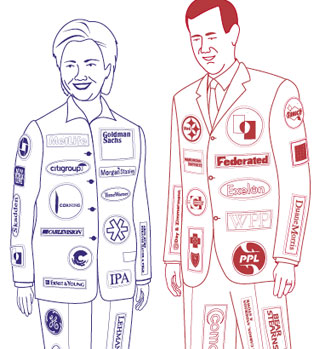
If politicians were NASCAR drivers, whose logos would they plaster on their jumpsuits? For George W. Bush it'd be a toss-up: top funder Morgan Stanley's non-descript blue triangle has a monetary, but definitely not an aesthetic, edge over number-two contributor Merrill Lynch's iconic bull. For Sen. Norm Coleman, a big red target would be front and center (same for Mark Kennedy, who's received more than $70,000 from the retailer this election cycle). But would these embroidered patches really suggest a candidate's loyalties? In this series I look look into what can be gleaned from politicians' financial disclosures.

This investigation began with a post on contributions to CD5 candidate Mike Erlandson's campaign by defense industry PACs. While the amounts are relatively small--$4000 from PACs and individuals affliated with the corporate recipients of lucrative US military contracts--the implication isn't: Erlandson is campaigning as the man to end the war, which he's characterized as a "train wreck," saying he "opposed the Iraq war before the first shots were fired in 2003." Hard words coming from a candidate who accepted funds from Parson's Corporation, a firm whose government contract to build 150 health centers in Iraq was yanked when it was revealed most of its funds went to build only six facilities.

How does Erlandson justify these gifts? More to the point, if he has "The values to get it right,” as his website motto states, would he give back such funds?

I left a voicemail, left messages with staffers, and emailed questions to Erlandson's office, but haven't yet received a reply. So instead I asked Frank Sorauf, University of Minnsota professor emeritus who co-authored the defense of the McCain-Feingold Act in McConnell v. F.E.C..

"If I were in his position I would tell my campaign manager to send it back with a non-inflammatory note, but honest and forthright, saying in view of their record you don’t feel you can accept their contribution," he says. "That ought to be easy for a candidate to do."

It also might be smart to do; other candidates, including Erlandson's primary challenger, Keith Ellison, have vowed to refuse funds from defense-related sources.

More to come...

Image: Serifcan Özcan via Good Magazine.

9.06.2006

Tools for Wonks: Pollster.com

With the noble goal of demystifying political stat-tracking, Pollster.com launched a few days ago, just in time for the primaries. A collaboration between Mystery Pollster Mark Blumenthal, media partner Slate, and University of Wisconsin political scientist Charles Franklin (creator of the blog PoliticalArithmetik), the site presents polling trends and cumulative averages of recent surveys by polling biggies Zogby, Gallup, Rassmussen and others. To get an idea how it works, check out this graphic representation of the Minnesota Senate race between candidate Amy Klobuchar, who now has a solid ten-point lead, and Republican Mark Kennedy, whose campaign gaffes of late are represented by a downtick in support over the last two months.

9.05.2006

Covering Kin: Market journalism and unequal treatment of political families

[Part 2 of a series on media coverage of political families. See Part 1.]

When politicians’ family members show up on the stump, it’s understood they’re fair game for the media. But recently relatives of two Minnesota leaders had run-ins with the law and got vastly different treatment by the Twin Cities dailies. Why did the 2004 arrest and eventual acquittal of Mike Hatch’s daughters on disorderly conduct charges merit ten times the ink as the recent story of Norm Coleman Sr.’s citation for public sex? The second in this two-part series ponders the elephant in the newsroom--is it political bias or the looming power of the media marketplace?

Almost immediately after his father was cited for lewd and disorderly conduct in late July, Sen. Coleman made a statement, while Norm Sr. remained silent. By contrast, after his daughters were arrested for a scuffle with police outside a Chicago bar, Hatch was active in his daughters’ case, and they made many public statements, in and out of the courtroom. “He wasn’t just commenting on their situation from afar,” says the Star Tribune’s readers representative Kate Parry. “He was involving himself very much with the way their case made its way through the justice system in Chicago.” So it was the reaction of Hatch, and not the merits of the case, that determined its newsworthiness?

Brian Lambert, a media critic who spent 14 years at the Pioneer Press, suggests “They were waiting for Hatch to do the Bigfoot thing”—that is, to see if Hatch would exert his influence to the benefit of his daughters.

Additionally, the story became the story: the aggressive Chicago media, says Parry, is “like the Twin Cities media on steroids,” and both local papers reported on how they covered the case. Perhaps they also took a cue from their Windy City colleagues: Strib columnist CJ likened the young women to Paris Hilton, Nicole Ritchie, and George W. Bush’s twin daughters; both local papers included multiple photos of Anne and Elizabeth Hatch shot during the proceedings, while the very few images of Coleman Sr. that were published were file photos from the campaign trail.
"No matter how high-minded the reader may say he or she is, their eyes will go to a picture of good-looking women in some kind of legal trouble with a famous dad. You can’t miss in terms of readership."
The coverage may have a lot to do with “market journalism,” news production that targets the broadest audience and in doing so runs the risk of prizing entertainment over substance. Lambert says, “It’s always a bona fide question to raise how these stories are being chosen. On a national scale, you see it in stark terms with the JonBenet Ramsey thing—any missing blonde generates headlines,” he says (a phenomenon so prevalent, it has its own Wikipedia entry). “And of course, the Hatch girls look good in pictures. No matter how high-minded the reader may say he or she is, their eyes will go to a picture of good-looking women in some kind of legal trouble with a famous dad. You can’t miss in terms of readership.”

Did the attractiveness of the Hatch sisters drive the coverage? Not at all says Parry; the real issue is how we as a culture view familial relationships: while parents are seen as responsible for the behavior of their children, the same can’t be said for a politician and his father, explains Parry: “It’s a different relationship between a parent and a child.”

But the market may have dictated the coverage in another way. According to a writer at the Star Tribune, the paper’s editors were debating the appropriateness of covering the Coleman citation at all when their rivals across the river beat them to the punch and posted its story online--they followed suit. This might explain Parry’s “odd” headline. “That story had been out for significant hours online before anyone had picked up their morning newspaper and so, at that point, you’re trying to spin it ahead to what’s interesting now,” she says. “It had the feel to me of someone straining to do something like that.”

With the well-known partisan backgrounds of Star Tribune columnist Katherine Kersten (a former fellow at the Center for the American Experiment and a member of Gov. Tim Pawlenty’s transition team) and political editor DJ Tice (once a conservative columnist at the Pioneer Press), it’s fair to ask if politics motivated the disparate coverage. Parry says there was no political pressure, internally or externally—neither from Tice nor from Sen. Coleman.

Lambert, however, has his doubts. “Norm’s got contacts all over the place. Any time you really take a shot at anyone like that, you jeopardize a whole trail of things.”

While no direct evidence exists that Sen. Coleman weighed in on coverage of his dad, he does have a record of downright belligerence with the press. During the campaign of 2002, WCCO’s Pat Kessler mentioned on-air that Norm Coleman’s wife Laurie, an actor in Los Angeles, was “visiting” Minnesota. Coleman called the anchor at home and reportedly shouted, "I have never been so outraged in my life! What you did to me and my family?" Kessler recounted:
“He yelled at me for a couple three minutes. I still didn't understand what this was about. I said, 'What's the matter? What are we talking about?' And he says, I'm going to give the phone to my wife," Kessler said Thursday.

"The first words out of her mouth are Visiting! Visiting! Visiting! I visit my in-laws. I don't visit my husband. I visit my friends, I don't visit my family. I vote here, I don't visit here. Those are all but direct quotes," said Kessler.

"She was just very upset because she thought it was, and she said this, a devious political shot, a way to embarrass her and her husband. A way to paint their marriage as something that it wasn't."
Given Mike Hatch’s much-publicized pre-emptive complaint to the Minnesota News Council about Star Tribune reporters’ questions about his family he deemed “the most sleazy type of innuendo,” Laurie Coleman’s parting threat is apropos. She promised to “take this story to the News Council” (she never did).


The man who cried Hitler.

"Bush compares Bin Laden to Hitler"
--BBC, 9/5/06

"Saddam the new Hitler, Bush tells Europeans"
--Sydney Morning Herald, 11/22/02

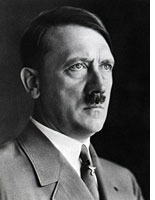
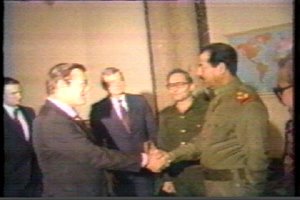
Apparently Bush and his strategists think all they need to do to sway public opinion in their favor is drop the A-bomb (that's Adolph) a few times to work the American people into a froth of fear. It happened the other day when Donald Rumsfeld compared critics of the mismanaged war to those who appeased the Nazis. It happened when a photo of Howard Dean popped up on the GOP website photoshopped with a Hitleresque shadow moustache. In a 2004 campaign commercial, the Republicans likened Dean, John Kerry, Al Gore, and other Democrats to the man who oversaw the extermination of six million Jews. And, of course, it happened again today, when the president compared the al-Qaeda leader to the Führer.

This time, at least, he's far closer to being right: bin Laden did admit to directing the hijacking and crashing of planes into the World Trade Center and Pentagon. But the Hitler reference, leveraged again and again by Bush and the Republicans and their TV talking heads, is fast being stripped of its rhetorical oomph, sadly for the victims and families of that very real genocide.

But even if Bush's Hitler reference carried the weight it once did, its use is strategically odd: it reminds us that, despite Bush's proclaimed understanding of the gravity of bin Laden's crime, he picked a fight with the dimestore Hitler, Saddam Hussein, instead of going after the one he let slip away.

The numbers: Five years after 9/11

In a special report on how we've changed in the five years since 9/11, the BBC includes a fascinating section of graphs showing the changes in, among other measures, Bush's approval rating and a spike in hate crimes. Of note are these two, showing the ever-slipping mentions of 9/11 mastermind Osama bin Laden in the news and an upward arching military budget.

9.04.2006

Boot Camp for the Armies of God.

A month ago, David Byrne blogged on the documentary film Jesus Camp, in a post aptly titled American Madrasas. An "even-handed" look at a bible camp in Devils Lake, ND, the film captures the "army of God" metaphors, the us-against-them/ with-Jesus-or-against-him proclamations, and the deep emotion that kids are lathered into in the course of being "saved." While denial of global warming, talk of getting the right judges and politicians in power, and fighting to overturn Roe v. Wade find their way into the camp, Byrne writes of a possibly more unnerving part of the camp:
There were some perfect sound bites — at one point Pastor Fischer instructs the little ones that they should be willing to die for Christ, and the little ones obediently agree. She may even use the word martyr, which has a shocking echo in the Middle East. I can see future suicide bombers for Jesus — the next step will be learning to fly planes into buildings. Of course, the grownups would say, “Oh no, we’re not like them” — but they admit that the principal difference is simply that “We’re right.”
IndiWire reports that the camp, dubbed "Kids on Fire," has it's radically political moments as well (and records the response of the scene to New Yorkers at the TriBeCa Film Festival):
One particularly inflammatory scene in the film takes place at a revival meeting at the camp lead by Fischer and her associates, in front of well over 100 children. Fischer takes a life-size standup photo of President Bush to the stage, with a large American flag in the background, and asks the crowd to raise their hands towards him as they begin to chant for him to appoint conservative judges to the Supreme Court. Fischer and her fellow evangelicals view Bush as their primary hope to push their right wing agenda regarding abortion rights, prayer in school, and gay rights, and the film captures the emotional devotion instilled on a new young generation of evangelicals. Many in the mostly liberal New York audience could be overheard saying that the film should be a call to arms for people on the left side of the cultural/political divide. The evangelicals, however, are reveling that their message has become an entrenched and potentially irreversible reality.
Made by award-winning Boys of Baraka filmmakers Heidi Ewing and Rachel Grading, Jesus Camp opens nationwide September 15 (Twin Citizens, it opens at Minneapolis' Lagoon October 6). Here's the trailer:

Appeasers.

9.01.2006

American Jewish World endorses Ellison

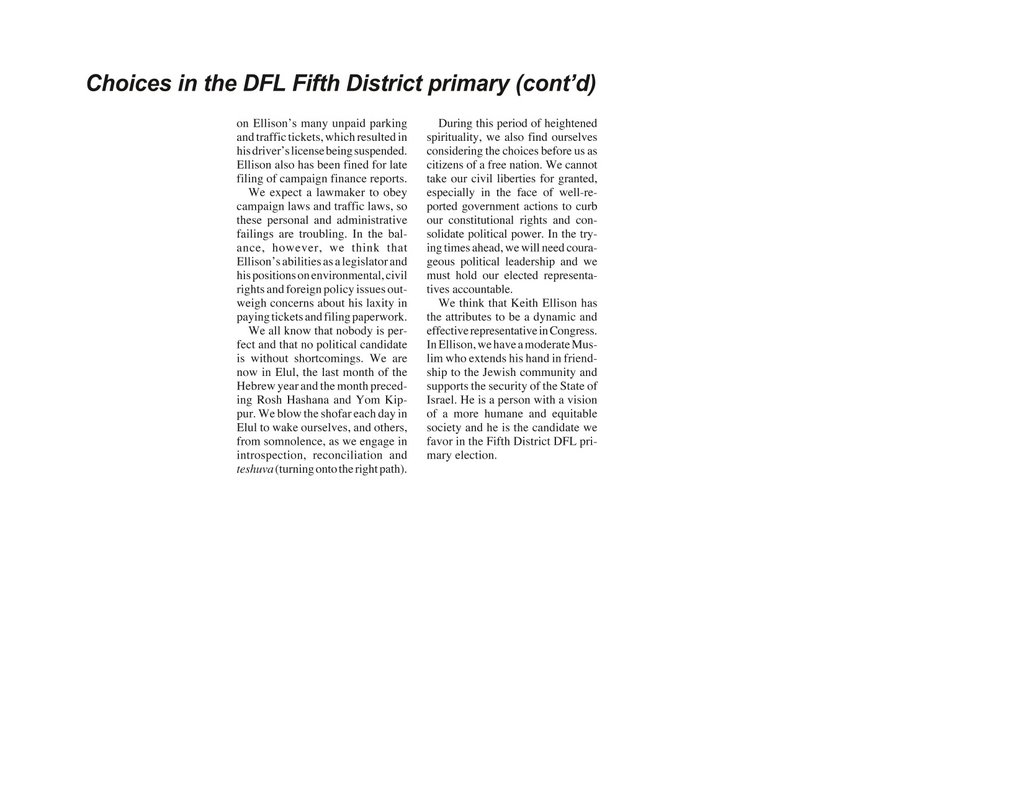
Keith Ellison, the Minneapolis state representative who could become the first Muslim U.S. senator, has been smeared like you wouldn't believe--he's an anti-Semite for affiliations with the Million Man March, he doesn't pay his parking tickets, he's too tight with Islamic leaders like CAIR's Nahid Awad. But today, the Democrats' endorsed candidate got support from what at first might seem like an unlikely source. American Jewish World endorsed him, calling him the next best thing to Paul Wellstone (I'm paraphrasing)--a bold, brave move that even the publication's editor admits was "something of a bombshell."

[Click image to read editorial.]

Animatus.


Picking up where Michael Paulus left off, artist Hyungkoo Lee is fleshing out the idea of the anatomy of cartoon characters: his drawings and 3D sculptures of the skeletal systems of comicbook characters will be on display at Arario Gallery in Seoul this month.

8.31.2006

Covering Kin: Why do misdeeds by some politician's relatives get more ink than others?

When politicians feature family members prominently in their campaigns—as attorney general Mike Hatch did when he announced the birth of puppies to family dog Bella in the “Hatch Family” section of his website and Sen. Norm Coleman did when he appeared with his father, a Battle of the Bulge war hero—how can they blame the media for covering fathers, daughters, and wives as news? But as a recent comparison of Twin Cities media coverage suggests, some politicians get different treatment than others when it comes to the misdeeds of their kin.

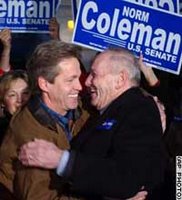
On July 25, 2006, 81-year-old Norm Coleman, Sr., was spotted in a car outside Red's Savoy Pizza in St. Paul having sex with Patrizia Schrag, a woman 43 years his junior. The father of Sen. Norm Coleman, he was cited for lewd and disorderly conduct, and a court date was set. In total, the Star Tribune wrote fewer than 600 words on the story, according to a search of Lexis-Nexis and the paper’s online archives. The two stories that did run were headlined in a manner that even Star Tribune reader representative Kate Parry notes as “odd.” The first, a 272-word piece published on July 27, read “Coleman vows help for dad cited for lewd conduct.” A second story the following day had the headline “Coleman expresses concern for his father.” (The Pioneer Press' story, which was published online before the Star Tribune's, stuck to the factual: "St. Paul police cite Sen. Norm Coleman's father for lewd and disorderly conduct.") Both Star Tribune pieces concluded with this note:
Sen. Coleman has often referred to his father, a veteran of the Normandy invasion and the Battle of the Bulge and a former businessman, as one of his personal heroes.
Even Coleman’s court hearing this week didn’t warrant coverage; says Curt Brown, who reported the initial stories, “It was just a continuance." (The St. Paul Pioneer Press deemed the Coleman story newsworthy and covered it on August 29, noting that Coleman would appear again September 25.) In 2004, another court case, also "just a continuance," was covered by the Star Tribune, and it involved the family members of another Minnesota politician.

Flash back two years: Mike Hatch’s daughter Anne traveled to Chicago to celebrate her 21st birthday at a club with her sister Elizabeth. At around 3 a.m., a guard at the club, Crobar, asked the sisters to leave because they were reportedly intoxicated and “causing a disturbance.” As police charged, a skirmish broke out and Elizabeth is said to have hit an officer in the face. After a trail and media spectacle that lasted 13 months, a Chicago judge acquitted the sisters of all charges, which included simple battery, resisting arrest, and criminal damage to property.

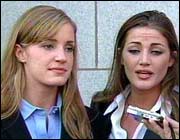
In sharp contrast to the Star Tribune’s sparse coverage of Norm Coleman Sr.’s police encounter, the paper dedicated more than 8,500 words to the “Hatch chicks,” as CJ, the paper's gossip columnist, took to calling them. Half of the stories featured photos of the then 21- and 24-year-old sisters, and the content of stories ran the gamut from factual reportage to essays on the “media buzz” the case had generated in Chicago to CJ’s top-10 list of questions for the sisters, which included, at number nine, “They are BABES! Why do you insist on calling them chicks?” and, at number four, “That Paris Hilton sex video is suddenly looking a lot more innocent isn’t it?”
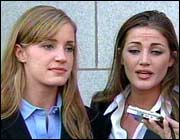
While the Minneapolis paper didn’t report anything on the results of background checks on Norm Coleman, Sr.—after a phone call, reporter Brown says Coleman had no prior arrests—the day after the Hatch sisters were charged, the Star Tribune ran a 1,200-word piece on Anne Hatch’s arrest in 2001, when, then 18, she tried to use her sister’s ID card to buy liquor.

Jane Kirtley, Silha Professor of Media Ethics and Law at the University of Minnesota, suggests that the protracted nature of the Hatch sisters’ trial gave reporters more material to print than Coleman’s seemingly open-and-shut case. “News organizations are often criticized for trying and convicting someone in the press before they have been tried and convicted in court,” she says, citing the recent case of JonBenet Ramsey's would-be-murderer John Mark Karr. “Most journalism ethicists would say it is appropriate to wait until an official proceeding occurs.”

In the first four weeks of coverage—roughly the same timespan between Coleman’s arrest and his court date this past Monday—the Star Tribune racked up nearly 3600 words on the Hatch sisters. Between the scuffle with police on March 27, 2004, and their first day in court, June 4, 2004, the paper wrote more than 4400 words on the case—more than half of their total coverage.

Coming in Part 2: The newsroom logistics--and politics--behind these decisions. Look for it Monday.

Cross-posted at Minnesota Monitor. Images (top to bottom): Bella and puppies; Norm and Norm Coleman, Sr.; the "Hatch chicks"
Femffiti.

Feminist street art. I like it:

Ask and you shall receive: politico delivers on opponent's wish

On Tuesday, Minnesota Secretary of State candidate Mark Ritchie called on his opponent, Republican incumbent Mary Kiffmeyer, to reduce fees he calls "hidden taxes that make it harder for small businesses and non-profits to survive." Within hours, Kiffmeyer did just that, sending out a fax to news organizations at 10 pm that announced the elimination of a $20 business filing fee for expedited counter service--a move she touted as equivalent to a "$1 million-per-year tax cut."

The fees "simply padded the state's general fund," she said. In a 2005 interview with Minnesota Law & Politics she boasted about that padding: "My office actually generates 150% more back to the General Fund than what it takes to run the office. We're a money maker for the state." The office collects around $14 million each year in fees, but operational costs only take up around $6 million, Kiffmeyer says. The about-face, while seeming abrupt, really wasn't, says Kiffmeyer representative Shaun Denham. "This is something we've been planning on doing for months."

[Cross-posted at Minnesota Monitor.]

8.30.2006

Textbooks: Sacred space or marketplace?

Nine hundred dollars can buy a lot of beer--or concert tickets or music downloads or ramen noodles--but for American college students, that's roughly how much they're spending on required textbooks each year. According to the government's General Accounting Office, the cost of such books has increased at twice the rate of inflation over the last two decades, while over the same period tuition has also outpaced inflation. Students find themselves with two options--not enrolling or not buying the books. But a two-year-old St. Paul-based company says they're coming to the aid of cash-strapped collegiates: they're offering free downloadable books to students; and all young scholars have to do is offer up a little data on buying preferences and endure a few dozen ads in the books. Win-win, right?

To get free books from Freeload Press students must fill out a brief survey. The questions are fairly innocuous: "Which car would you most likely buy after graduating?," with a pulldown menu of options, from Acura to Scion. "What will be your first major purchase when you graduate?" (Options include car, home, jewelry, and electronics.) Once completed, they can choose from a dozen or so books, which are sprinkled with ads for Culver's, FedEx Kinko's, math tutoring software, and the like.) The company won't include ads for beer, tobacco or "edgy kinds of things," says Freeload Chief Operating Officer Howard Quinlan. Ads don't interfere with content, and only appear in natural breaks in the editorial material--endplates and chapter breaks--a decision that came after discussion with students and textbook authors.

So far, Freeload offers books mainly in business-related fields (accounting, economics, math), and Quinlan admits that's because marketing is already part of the vocabulary of such fields. He adds, "Perhaps, if you got into the social sciences, maybe there'd be less acceptance." (The New York Times suggests that the acceptance, which it says is low already, might be tied to a name that "conjures an image of party crashers cadging free beer, not a publishing concern striving for the highest intellectual standards.")

Quinlan admits that there's a quid pro quo: students, "the most over-sampled demographic in America," know that they're being marketed to, but, he says, many of them will support the advertisers in gratitude for making the books available. "Really, there's no punches pulled; it's exactly as you see it and the advertisers that promote this really has a lot of wind in their sales in regard to goodwill."

Freeload doesn't sell student-submitted data, Quinlan promises, and the ads are "limited and tasteful." During a recent visit to the University of Houston Business School, he says he saw a Starbuck's in the student union and corporate ads. "The whole environment today is so significantly different that advertising is a part of this demographic's world. They've been surveyed to death, but if they didn't like it, why would they go out of their way to write a five- or six-sentence pithy response thanking us?"

Quinlan knows that "there's always going to be some people who think that [advertising in textbooks] is going to be sacred territority." One such person is John Schott, a professor of cinema and media studies at Carleton College in Northfield, MN. He sees efforts like Freeload's as akin to getting branded products in high school lunch rooms and bathroom walls. Schott says he's not naive enough to call for an ad-free world, but "The real question is where do we draw lines? For me, there aren’t really clear principles about how to do it. It’s a matter of taste, a matter of aesthetics, and a desire to create a culture that has spaces free from advertising.”

Such places are few and far between, as ads appear on cellphone screens, blimps hovering over the Metrodome, foreheads (and other tattooed body parts), signs held by the homeless, answering machines (damn you, Samuel L. Jackson!), and just about every surface of our urban environments. While somewhat ambivalent about Freeload Press' endeavor, Schott worries about the precedent. “It’s the foot in the door idea. It’s not unlike advertising before the movies. It used to be there would be one Coke ad before movies--and I'd complain to management each time. But, lo and behold, now you have advertising for five or eight or in some cases 10 minutes," he says.

"Every visual experience is going to eventually be associated with some kind of brand message," Schott adds. "I think it’s important to say we value spaces that are free of that. Especially when you look at the new locative media technologies that are being developed--billboards that ring your cellphone when you walk by, for instance--unless controlled, they can get very virulent. This invasion of advertising messages in our society is in a very incipient stage and it’ll be much more invasive in five, which is a reason to have a debate now and ask ourselves where we draw the lines."

[Cross-posted at Minnesota Monitor. Image credit.]

Anchor leaves mic on in the loo.

Like that scene in Naked Gun (sort of), a CNN anchor left her microphone on in the restroom while George W. Bush was giving a speech on the aftermath of Hurricane Katrina. What Kyra Phillips said is here.

Blue.


[via]

8.29.2006

Agitcrop! Political Art of the Minnesota State Fair

The Minnesota State Fair's exhibition of crop art is the epitome of democracy: as David Steinlicht, who runs CropArt.com, says, "The art competition in the Fine Arts building is so fierce that your chances of getting in are slim. But a guy with some patience and seeds and glue can get shown, almost 100% of the time." In fact, every submission--unless it breaks one of the very few rules, as one piece, a Jerry Garcia portrait made entirely from hemp seeds, did one year--is hung in the show. Given its radically democratic nature, is the crop-art display--which in recent years has seen an increase in politically themed works--a bellwether of the State of the State?

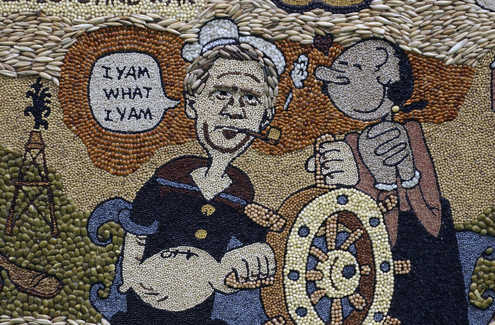
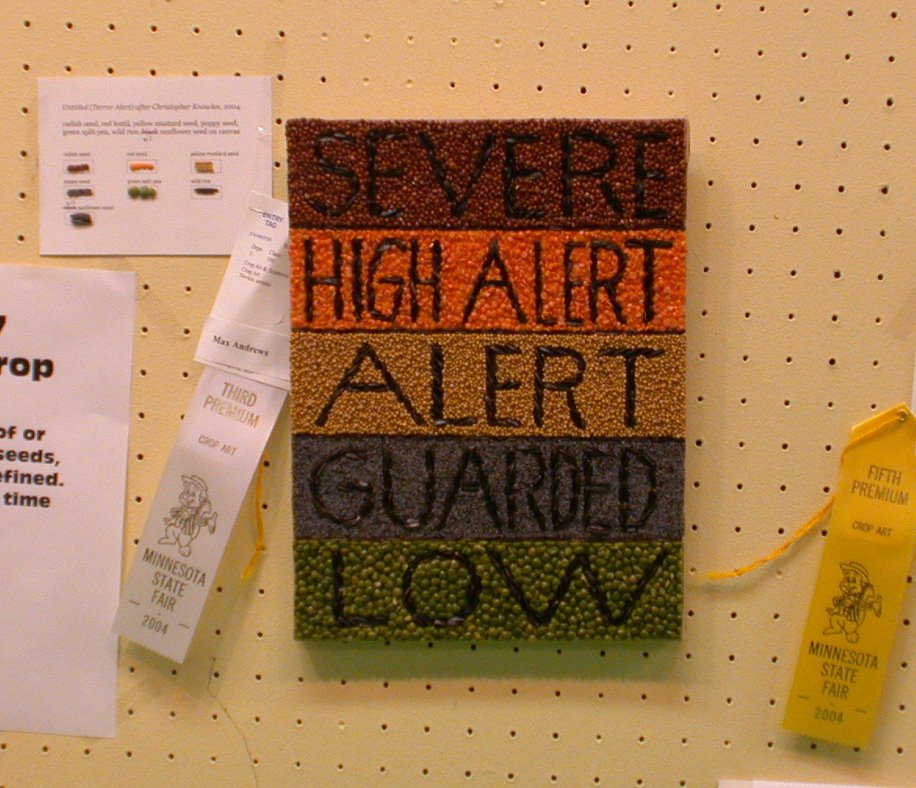
George W. Bush has been a frequent subject of grain-based art: in 2003, lawyer Laura Melnick created Curious George Looks for Weapons of Mass Destruction. This year the president appears as Popeye, alongside his beloved, and the words "Addicted to Oyl." Another shows Bush's seedy image alongside a passage from the biblical book of Job, "Those who sow trouble, harvest it," and still another is a seed-encrusted cereal box called "Weapons of Mass Distraction." But the critiques take aim elsewhere as well. In 2004, Max Andrews, a British citizen and visiting curator at the Walker Art Center, rendered the Homeland Security terror-alert levels in the seeds abundant in the homeland. And to the dismay of the blog Powerline, one artist in 2004 turned "a cheerful and somewhat goofy craft... to hateful political uses"; "Rightwing pie fling" showed a GOP elephant and a photo of Michele Bachman, leaving viewers to guess the use of said "pies."


But "agit-crop" wasn't the original intent of this artform. While it's only been at the State Fair since the 1960s, the tradition goes back to the middle of the 19th century, when politicians and business leaders in Minnesota, Iowa, and the Dakotas devised ways to lure Easterners to the midwest. To show off the incredible agricultural abundance of the area, they threw festivals and fairs, where gigantic squash and buckets of apples were displayed--along with seed art (the famed Corn Palace in Mitchell, SD, is a part of this tradition).


It wasn't until 1989 that things turned political. Cathy Camper, a Minnesota writer and librarian now living in Portland, Oregon, created a crop-art portrait of Haile Selassie, emperor of Ethiopia and inspiration for Rastafarians. In following years, her images honored Che Guevara (above), Cesar Chavez, Malcolm X, Nina Simone, and others. Part of her goal was to use the forum of the fair, with its thousands of visitors, to present ideas and icons that'd make people think. "I don't believe people necessarily see something and suddenly change their politics," she says. "But a lot of times, I've done a portrait and someone says, 'I didn't know what that was, but I went and got a book and read about them."

While Camper has generated her share of controversy--her tattoo-like image of a woman, dubbed La Diablita, was yanked from the fair, after winning a ribbon, due to complaints about nudity from visitors--Laura Melnick's work is more viscerally in line with this sentiment about art and politics by Pablo Picasso:

What do you think an artist is? An imbecile who only has eyes if he’s a painter, or ears if he’s a musician…? Quite the contrary, he is at the same time a political being constantly alert to the horrifying, passionate or pleasing events in the world…No, painting is not made to decorate apartments. It’s an offensive and defensive weapon against the enemy.
Melnick's work has taken on "enemies," to use Picasso's too-harsh terminology, from former Gov. Jesse Ventura in 1999 to a Flintstone-inspired piece targeting Ramsey County Commissioner Dino Guerin to, in seven of her last eight works, George W. Bush. On the other hand, crop art can address the personal to be political: Camper, who is Lebanese-American, recently did a timely portrait of the singer Fairouz, who has sung about peace in the Middle East. "With the bloodshed in Lebanon, all those people who'd died, I felt really sad."

While, like any art, crop art can be biting and humorous, aesthetically pleasing or ugly as, well, canned beans, it's the metaphor that appeals to Camper.

"Seeds engender bigger things. A lot of the people featured in my portraits started out small--they weren't representatives of the power structure--but they grew to be huge. It's corny," Camper says, stopping to laugh at her inadvertant pun, "but the medium really has metaphorical possibility."

[Cross-posted at Minnesota Monitor.]

Gulf coast stagecraft

The Washington Post:
Bush's visit to Mississippi, carefully scripted by the White House, left little possibility of the president encountering much anger over the federal reconstruction efforts. After meeting with Republican Gov. Haley Barbour and other leaders for lunch, Bush toured a working-class east Biloxi neighborhood that he visited a year ago, passing empty lots and FEMA trailers along the way. The hot sun left his blue shirt sleeves soaked in sweat.

Some of the same people he met last year were in a friendly audience of several dozen local residents who heard from Bush after he finished his tour Monday, a few clutching pictures of themselves being consoled by the president in the aftermath of the storm last September.

8.28.2006

Haunted pod village?

The Taiwanese coastal town of San Zhi hosts an array of abandoned modular homes:
There are no named architects since the whole site was commissioned by the government and several local firms. They were trying to create a posh luxurious vacation spot for the affluent and rich streaming out of Taipei. Now this is where things get weird. The local papers say there were numerous accidents during its construction, and as news spread to the urbanites of the island state, nobody wanted to vacation there, much less visit. Locals say the area is now haunted by those who died in vain and because they are not remembered, they linger there unable to pass on.
Via Tropolism.


Tiny street-art

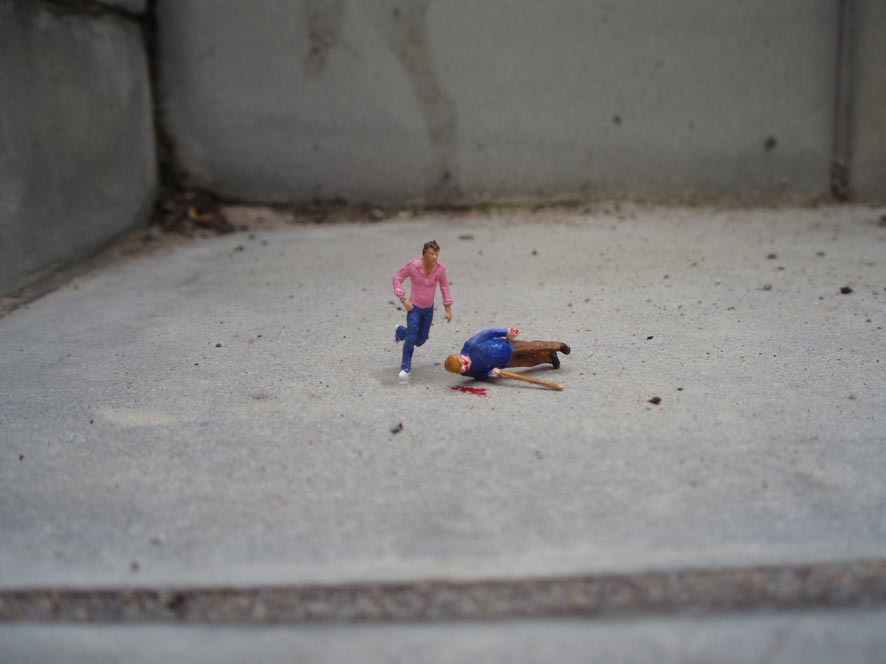
Slinkachu, a 26-year-old London-based artist, is doing a curious art project: he's creating tiny hand-painted figurines and leaving them around the city as commentary on social issues. There's very little info on the site, "Little People - a tiny street art project," so I can't tell if the figures are hand-crafted as well. But the idea is nice--leaving tiny humans in call boxes and sidewalk crevices for passersby to find.

Tim Pawlenty, "blogger."

I've covered Mark Kennedy's un-blog pretty thoroughly, but his campaign seems to understand the medium far better than Minnesota Gov. Gov. Tim Pawlenty's. Like Kennedy, the governor doesn't write anything--so no opinions, no first-person voice-of-the-candidate musings, no feedback mechanism--instead, just links to the Star Tribune and Pioneer Press and announcements are stored there. Makes me wonder: with all the buzz about blogs of late, are politicians just using the language as a stand-in (like Kennedy's comment-free, link-free blog) for populism? Or maybe it's just a typo: "Online Press Office" and "Blog" are merely a dozen or so letters apart.