1.03.2006

Not so super: US on landmines

Following up my post on the US' opposition to landmine bans, TruthSurfer digs through his comic book collection to see just how far the US has fallen: as recently as 1998, the Department of Defense was collaborating with UNICEF and DC to produce Superman comics to warn kids in Bosnia, Honduras, Nicaragua, and Costa Rica about the dangers of landmines. Mines, which can remain active for 50 years or more, kill 800 people a month, TS writes, making it "a perfect soldier... Ever courageous, never sleeps, never misses" (in the words of a Khmer Rouge general quoted in the UNICEF State of the World's Children 1996 report).

Learn more at Landmines Blow.

Bloggies Nominees

The sixth annual best-of-the-blogs awards, The Bloggies, are now accepting nominations. Categories run the gamut from best Asian blog to best tagline to best new blog. Since the same blogs (esp. in the political blogs category) keep showing up, get in there and nominate somebody new. (May I suggest "Best Kept Secret" or "Best Tagline" for yours truly?)

1.02.2006

Kiki and Catholicism

Kiki Smith's art runs the gamut of themes, from mythology and folklore to feminism, science, and the natural world. But in an interview with Art 21, it's her discussion of the religion of her childhood that most grabs me, and not just because, like Smith, I was raised Catholic. I've long pondered the row of churches across the street from my day job at the Walker Art Center, and the "mysteries" that both art and religion ponder. And I've thought about how the object orientation of Catholicism had distinct parallels with the charged objects we show in the galleries (lining up in elementary school to kiss the bloody feet of a crucified ceramic Jesus during Lent seemed to suggest that the object isn't what matters, just as a canvas slashed by Italian artist Lucio Fontanta is about the action as much as the embodiment). Smith sums this idea well:
It’s one of my loose theories that Catholicism and art have gone well together because both believe in the physical manifestation of the spiritual world, that it’s through the physical world that you have spiritual life, that you have to be here physically in a body. You have all this interaction with objects, with rosaries and medals. It believes in the physical world. It’s a ‘thing’ culture.

It’s also about storytelling in that sense, about reiterating over and over and over again these mythological stories about saints and other deities that can come and intervene for you on your behalf. All the saints have attributes that are attached to them and you recognize them through their iconography. And it’s about transcendence and transmigration, something moving always from one state to another. And art is in a sense like a proof: it’s something that moves from your insides into the physical world, and at the same time it’s just a representation of your insides. It doesn’t rob you of your insides and it’s always different, but in a different form from your spirit.
Read the entire interview. Kiki Smith: A Gathering is now on view at SFMOMA through January 29 and opens at the Walker here in Mpls February 26.

Also: An interview with Smith by Carlo McCormick.

[Above: Lilith, via.]

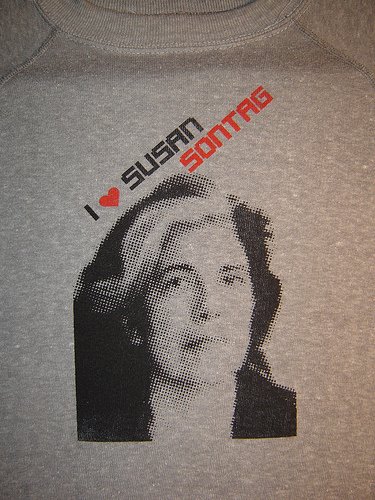
I (heart) Sontag.


Via reBlog. SusanSontag.com

US opposed to landmine ban

The Daily Irrelevant links:
In 1994, the United States was the first nation to call for the elimination of landmines that killed and maimed hundreds of thousands of innocent people around the world.

But that was then. Today, Washington not only stands in opposition to an international treaty that bans the use and production of antipersonnel landmines, but intends to make new ones too.

In reversal of its earlier policy, the U.S. is reportedly planning to produce a new generation of landmines called “Spider” by March 2007, a move that has alarmed civil society groups campaigning for a global ban on the use and production of landmines for years.

“We are concerned about this,” says Alison Bock, president and founder of Landmines Blow!, a U.S.-based independent group. “This would erase many of the positive steps the U.S. has taken in the past.”

12.31.2005

Pet rescue

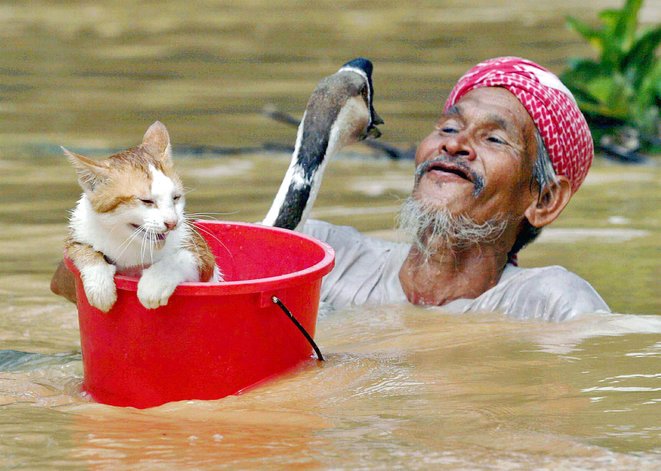
Othman Awang, in the Malaysian village of Kepala Bukit, rescues his cat and pet goose from floodwaters. Via the Daily Irrelevant.

Eric Fischl: George Talks to God

Artist Eric Fischl tries his hand at turf usually reserved for Get Your War On. Click image for larger version of George Talks to God.

Cross-cultural poetics

Via The Nonist, a link to the University of Pennsylvania's Cross-Cultural Poetics radio show. Hear tons of audiofiles of poets from around the world: San Francisco's Michael Palmer, on the dilemma of poetry in the Age of Bush; Egyptian poets Mohamed Metwalli and Maged Zaher with Chinese poet Zhang Er on poetry and dissent; Malaysian poet Eddin Khoo on, among other topics, the minority Hindu population in Muslim Malaysia; and big names like Alice Notley, C.D Wright, Wang Ping, Russell Banks, and Robert Creeley.

Happy Leap Second

2005 was a long year, but tonight it gets longer: at the stroke of midnight, the Paris Observatory will add an extra second to clocks worldwide in what's known as a leap second. Every seven years, such a thing happens, to synch up clocks with the solar time measured by astronomers.

12.29.2005

Bangkok street art

Reminiscent of Storker, this street-art was created by homeless people in Thailand. icel101 writes:
I went to the Chao Phraya Port to check out the river tours and look at what I saw -- an artwork made out of newspaper and dirt created by the homeless people of Bangkok. You can put coins in it.

12.28.2005

Best links of 2005

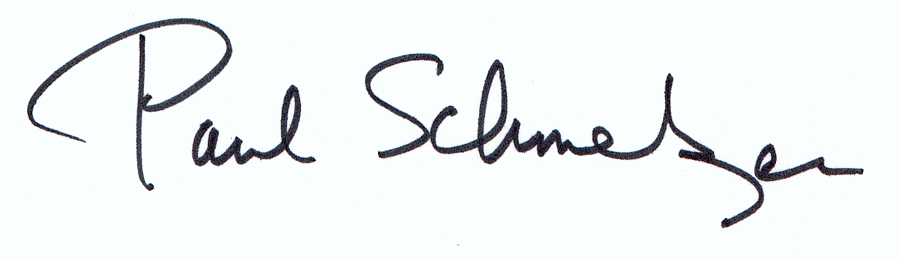
Thanks to Jason Kottke for including my autograph project, "Hello My Name is..." as one of the best links of 2005. Above, my name as signed by Studs Terkel.

12.23.2005

Happy New Year

One of the constantly shocking things to me about blogging is how poor my memory is and how the American news cycle seems to compact history. Looking back on the last 12 months of blogging, I'm reminded that we started out this year with the aftermath of a tsunami, which left CNN's bloated bodies floating face-down through my dreams for weeks. It was the year of Terri Schiavo (wasn't that 2004?), of Ratzinger and Harriet Miers and Pat Robertson (who famously said activist judges are a worse threat than al-Qaeda, and called for the assassination of Hugo Chavez). The Downing Street Memos were leaked, Cindy Sheehan had her galvanizing moment in the ditch, and support for Bush, the GOP, and the war in Iraq all started unraveling (remember this guy's "
bullshit detector
"?). It was also a year of deaths and births, with heroes dying—Susan Sontag, Rosa Parks, Saul Bellow, Sens. Gaylord Nelson and Bill Proxmire, and Congresswoman Shirley Chisholm—and new paths emerging (more on this later).

As I head off for a week away from the blog, I've been looking back at the year. I feel like Eyeteeth has turned a corner: I'm getting a few more readers, I'm focusing more on art and innovations than on venting my spleen
about politics, and I'm enjoying blogging more. So in 2006, come back for more, including, hopefully, an all-new design.

Here's a few of my favorites from 2005 to tide you over til I return:

Divinity for the Reality-Based Community: how can art connect us to the divine without distracting us with religion?

A good way to die: Scott Nearing's life was about integrity—inner values integrated with external expressions—and having lived it well, he decided when and how to die.

Bush in a skirt!

September was a doozy: Hurricane Katrina really pissed me off, and a life-changing trip to Berlin dominated the blog.

It's all about me: after many years, I finally got my autograph project online, posting examples of celebrities who used their pens to sign my name.

A year-end plea: Love thy bro!

12.22.2005

Snakes on a Plane!!

Plot summary, title, marketing angle, all rolled into one: that’s the brilliance of the title of Samuel L. Jackson’s upcoming film.

For what it's worth...

Of 60,384+ responses on MSNBC's poll question "Do you believe President Bush's actions justify impeachment?," 87% said yes.

12.21.2005

Xmas card


From the Wooster Collective to me to you: Happy Holidays!

Who they're spying on...

A letter writer in today's Strib asks: "Who is the National Security Agency spying on? Names chosen from a phone book? Political opponents? From what I gather from limited news reports, the numbers and e-accounts that were monitored were discovered in places like the hard drives and phone books of captured Al-Qaida operatives. It seems to me the only people in 'danger' are those who cooperate with terrorists."

Think again. FBI documents released by the ACLU yesterday outline numerous surveillance and intelligence-gathering operations targeting lawfully assembling groups like the Catholic Worker Movement and Greenpeace. The Catholic Workers, founded by Dorothy Day on the radical "belief in the God-given dignity of every human person," were targeted because of their "semi-communistic ideology." The documents reveal that the FBI's counterterrorism agents monitored the activities of groups dealing with the environment, poverty reduction, peace activism, and animal cruelty. The ACLU suspects that as many as 150 protest and social justice groups may have been improperly monitored by the feds.

12.20.2005

Badass bedside table

The Safe Bedside Table converts from quaint night stand to bludgeon and shield in seconds flat.

(Via AWV.)

The I Word

As legal scholars weigh in on whether Bush's admission that he authorized wiretapping of American citizens without a court order is a criminal act, it's not just kooks like Ramsey Clark who are calling for impeachment. U.S. Rep. John Lewis called for it on Monday, and Sen. Russ Feingold chided Bush: "The President does not get to pick and choose which laws he wants to follow. He is a president, not a king." Even former White House Counsel John Dean, part of Nixon's cabinet, says the unauthorized surveillance of citizens is an "impeachable offense" that's specifically forbidden in the Foreign Intelligence Surveillance Act, passed in 1978 in response to Nixon's electronic eavesdropping.

But maybe a parallel with Clinton, as well as Nixon, is in order. Both guys fibbed about the details. In a 2004 speech (sadly, not under oath), Bush lied through his teeth, failing to mention that he OK'd citizen surveillance two years earlier:
[A] wiretap requires a court order. Nothing has changed, by the way. When we're talking about chasing down terrorists, we're talking about getting a court order before we do so. It's important for our fellow citizens to understand, when you think Patriot Act, constitutional guarantees are in place when it comes to doing what is necessary to protect our homeland, because we value the Constitution.
More Bush wiretap lies here.

Dispatch from the liberal media: The New York Times, it seems, sat on the illegal wiretapping story, waiting to publish it only after the presidential election.

Update: US Rep. John Conyers is serious about holding Bush and Cheney accountable for their abuses of power. He's introducing three resolutions that could impose penalties ranging from censure to impeachment—and not for the domestic wiretapping charge: he wants an investigation into Bush's and Cheney's manipulation of prewar intelligence.

Stalin's monkeyman militia

The Scotsman reports that Soviet dictator Josef Stalin ordered the creation of a super-army consisting of man/ape cross-breeds. Newly revealed documents in Moscow archives show that Stalin conscripted scientist Ilya Ivanov in the 1920s to, in Stalin's words, create an "invincible human being, insensitive to pain, resistant and indifferent about the quality of food they eat." Luckily, the usually successful horse breader Ivanov failed in his endeavor:
[I]n 1926 he was dispatched to West Africa with $200,000 to conduct his first experiment in impregnating chimpanzees. Meanwhile, a centre for the experiments was set up in Georgia - Stalin's birthplace - for the apes to be raised.

Mr Ivanov's experiments, unsurprisingly from what we now know, were a total failure. He returned to the Soviet Union, only to see experiments in Georgia to use monkey sperm in human volunteers similarly fail.
[image]